
Understand the home
LiDAR, IMU, odometry, ToF, microphone arrays, and vision provide environmental and interaction signals.
TECHNOLOGY · FOR BUILDERS
We develop an emotion-aware embodied-intelligence brain that coordinates perception, mobility, BSLA companion decisions, family memory, and applications. Kangkang is the first product.
View architecture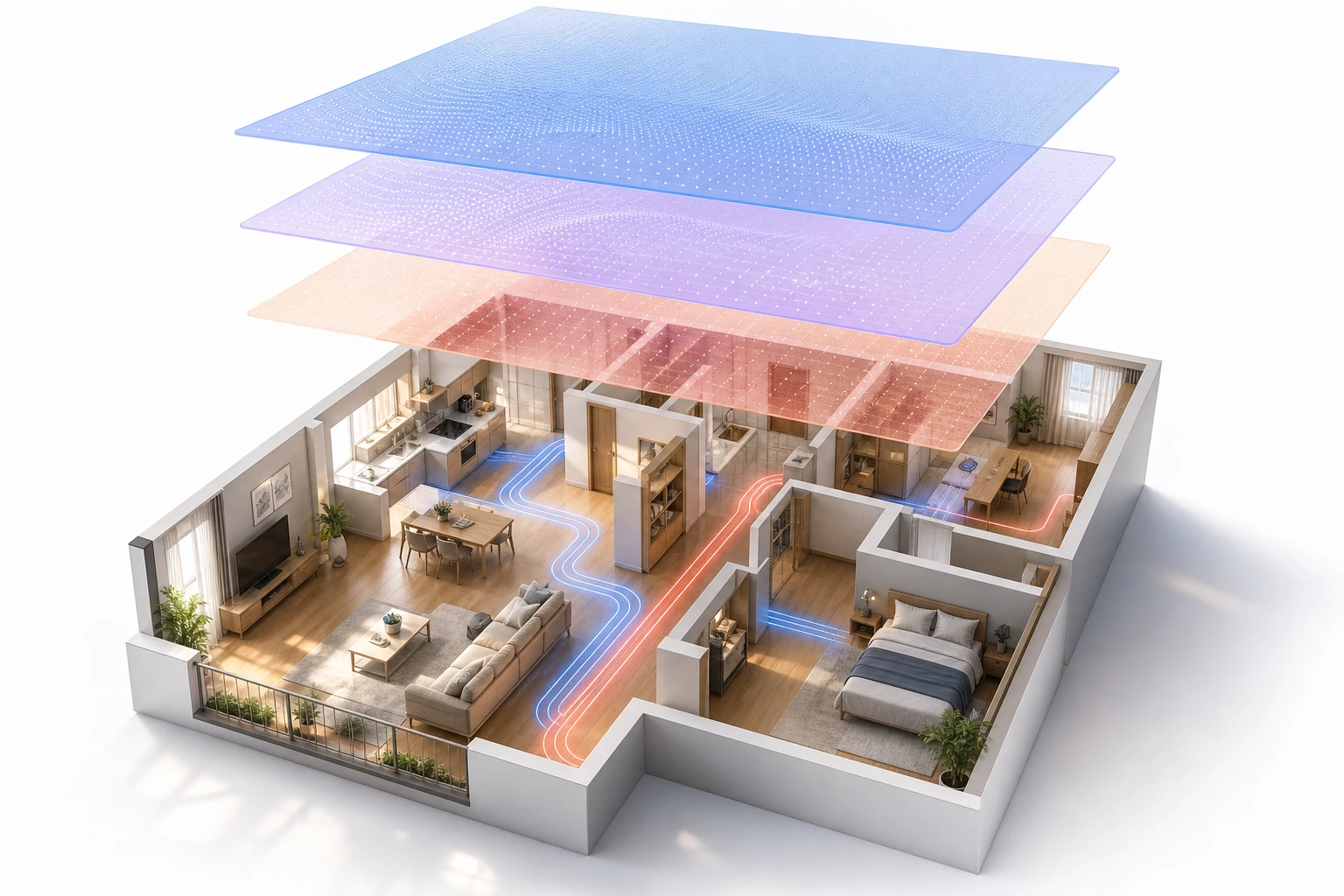
The home is the hard part
Long-term use requires navigation through physical space, appropriate social boundaries, and trust.
System architecture
LiDAR, IMU, odometry, ToF, microphone arrays, and vision provide environmental and interaction signals.
SLAM, path planning, dynamic obstacle avoidance, differential drive, and auto-charging work together.
BSLA turns behavior, emotional cues, language, and authorized memory into companion actions.
Proactive conversation, reminders, family participation, and OTA updates connect robot and app.
In-house embodied mobility
Mapping, localization, path planning, obstacle avoidance, and auto-charging support movement in suitable indoor spaces.
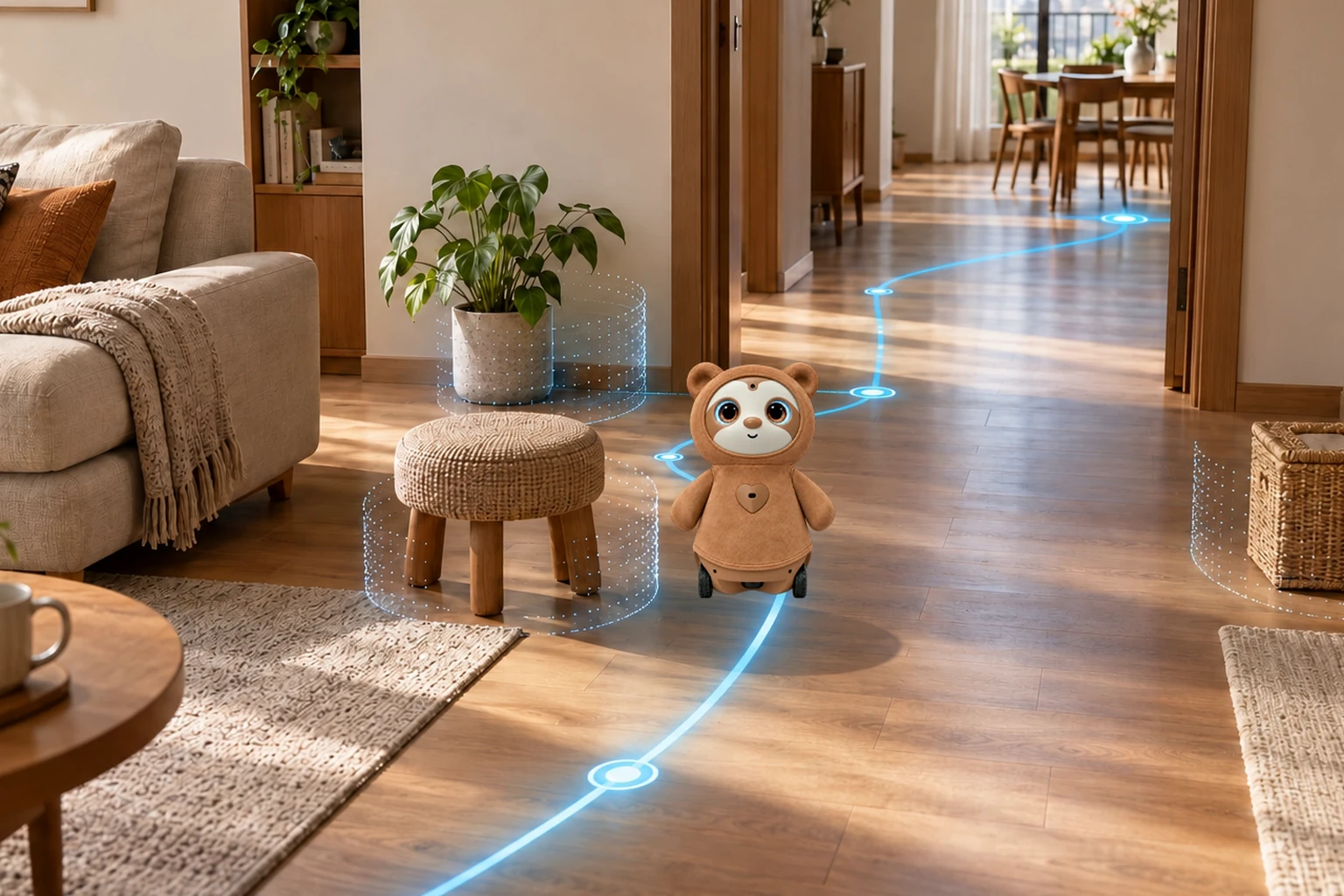
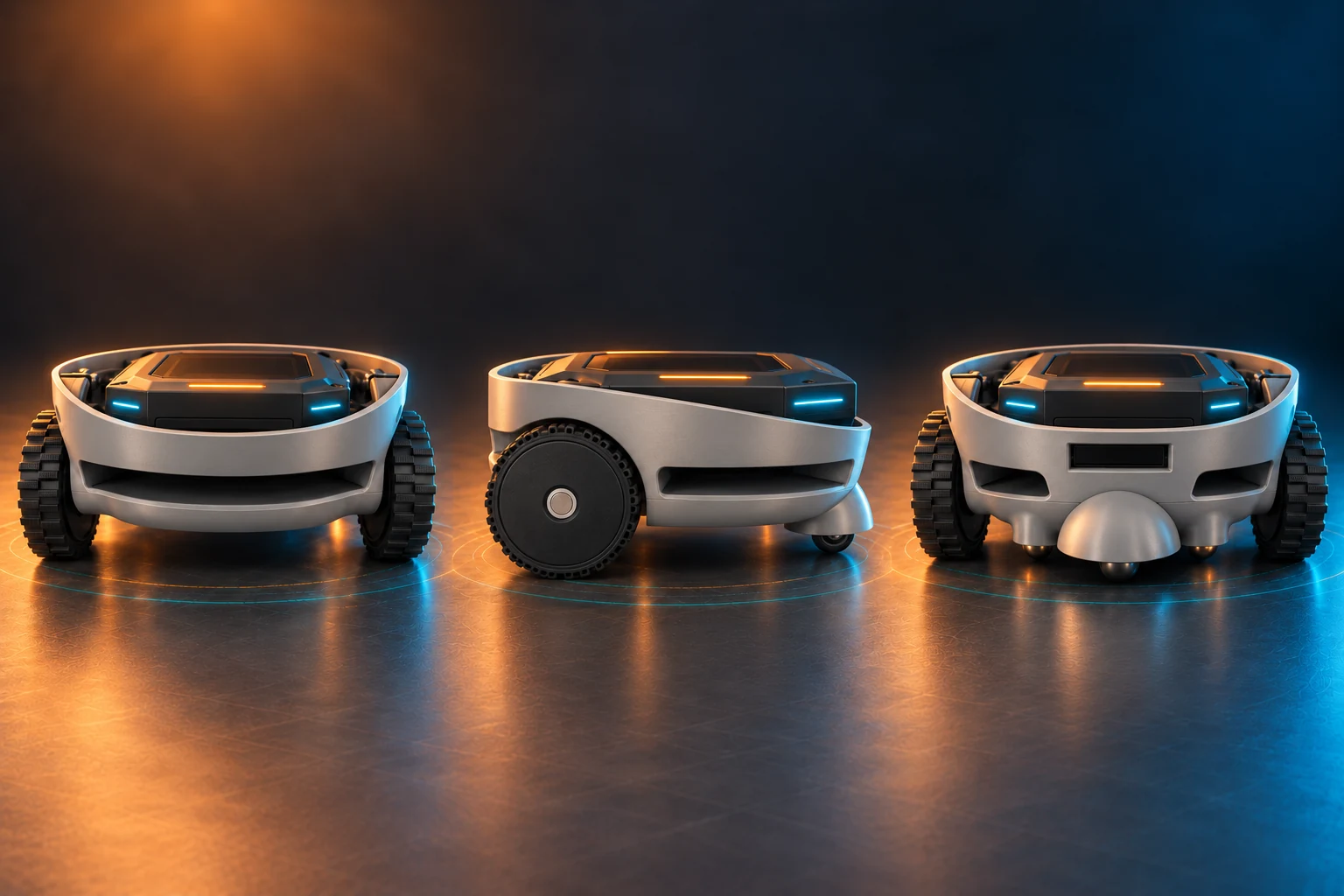
Multi-sensor fusion
Radar, IMU, and odometry support mapping, localization, and state estimation.
Dynamic path planning
Global and local planning adjust routes around everyday obstacles.
Clear limits
Stairs, high thresholds, and wet or slippery floors are not suitable.
BSLA companion decisions
BSLA is not a single chat model. Rules and models work together with behavior, emotional cues, language, and authorized family memory before the robot acts.
Balance a desire to interact with the need not to interrupt.
Consider agreed schedules and current context.
Coordinate language, expression, and movement.
BSLA supports everyday companion interaction and continues to improve through real use. It does not provide health assessment, professional care, or emergency response.
Multi-user family memory
The family memory system serves different household members through context, intent, and long-term memory. Together, the three layers provide cues for companion decisions across ongoing interaction.
Data processing and deletion remain governed by current product settings and the official privacy policy.
Emotional companion brain · Research directions
Next-stage research connects a deeper understanding of people and relationships with action in the physical home.
Family companion decision engine
Building on three-layer, multi-user family memory, further research will connect identity, emotional cues, and relationship graphs to inform when and how to respond.
Lingdong mobility system
Further development will address low-light charging, map updates after layout changes, and navigation and recovery in narrow spaces, connecting decisions with adaptive action.
R&D roadmap
Refine mobility, conversation, and proactive companionship through real use.
Improve decisions, memory, family participation, and safety boundaries.
Explore brain authorization and an EPU emotion-computing chip.
Technology and product partnership